
No. Being quiet describes how much someone speaks or displays in a particular setting. Introversion describes a broader tendency toward less outward social stimulation and more comfort with the inner world. The two can appear together, but neither proves the other. A person may speak little because they are thinking, unfamiliar with the group, protecting their privacy, tired, or worried about judgment. An introverted person may also be animated with trusted friends, speak firmly when a subject matters, and participate well in a group. The useful question is not ‘Which label fits this one moment?’ but ‘What changes across settings, and what seems to explain the change?’
Quietness is an observation, not a personality verdict
When someone is called quiet, the available evidence is usually visible: they speak less often, take longer turns between comments, listen without adding much, or choose not to enter a fast conversation. That description can be accurate without explaining why the behavior occurred. It tells you what happened, not which inner process caused it.
Personality interpretation starts one step later. Introversion is commonly treated as one end of the introversion–extraversion continuum, a dimension concerning a person’s orientation toward inward and outward social experience. In a Big Five-style frame, lower extraversion may be associated with less frequent social participation, lower social energy, or less attraction to highly stimulating interaction. These are tendencies across time, not rules for every conversation. The distinction matters because a single quiet meeting is weak evidence for a broad trait.
What introversion can illuminate
Introversion can help organize a recurring pattern: someone often prefers one-to-one conversation to a crowded group, chooses a calm activity after a busy day, or feels more at ease observing before joining. It may also describe a preference for fewer but more selected social contacts. These patterns concern attraction, comfort, and social participation, not a lack of care for other people.
A study of Finnish ninth-grade students is useful here because it did not treat introversion and social engagement as opposites. It reported that introverted students were not necessarily unsocial and that many were socially engaged. In group learning, social engagement included listening, building on another person’s idea, and helping peers, not just talking frequently. This gives a better observable test than counting words: does the person contribute to the shared task, even if they do so quietly? The study was cross-sectional and self-reported, so it cannot establish a universal rule or a cause.
Why quiet people may speak less
Low speech frequency has several plausible explanations. Someone may need processing time before answering, especially when a question is complex or the conversation moves quickly. They may be new to the group and still learning its norms. They may prefer to disclose personal information slowly, or they may have decided that listening is more useful than adding another comment. Fatigue, workload, language fluency, sensory load, and the power relationship in the room can also change how much a person speaks.
These explanations are not interchangeable. Processing time points to a pace of thought; privacy points to a boundary around disclosure; unfamiliarity points to limited knowledge of the setting; apprehension points to concern about what might happen if one speaks. The same outward behavior can therefore arise from different processes. A responsible profile keeps the observation separate from the interpretation until there is a pattern across more than one situation.
A worked comparison across three conversations
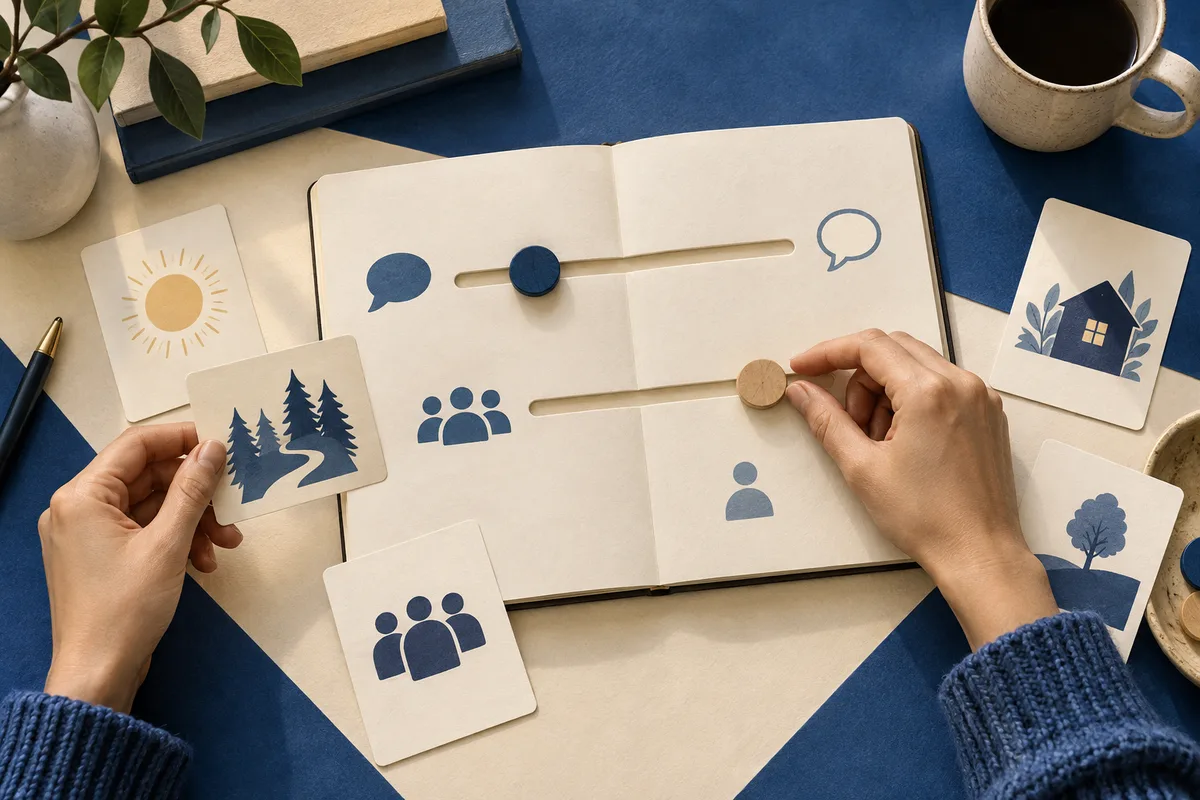
Imagine an unnamed person in three ordinary exchanges. In a large meeting with unfamiliar colleagues, they take notes and offer one carefully prepared point. At lunch with two long-term friends, they tell stories, ask questions, and keep the conversation moving. In a one-to-one discussion about a decision they care about, they disagree clearly and explain their reasons. Calling this person simply quiet loses the pattern. Their speech changes with familiarity, group size, and personal relevance.
Several interpretations remain possible. They may have a lower social-stimulation preference and still be highly capable of engaging. They may be cautious in unfamiliar groups but comfortable once trust is established. They may process public comments before speaking. The example does not allow a confident conclusion about a trait, and it certainly does not justify calling the person shy. It does show why behavior across settings is more informative than a label based on one room.
Personality states explain the apparent contradiction
Personality research distinguishes traits from states. A trait is a relatively enduring tendency; a state is the person’s momentary way of behaving, thinking, or feeling. Researchers use this distinction because people vary considerably from one occasion to another while still showing a more stable average pattern over time.
That means an introverted person can act in an outgoing way during a presentation, a celebration, or a conversation where their expertise is needed. An extraverted person can be quiet while reading, grieving, concentrating, or entering an unfamiliar group. Research on personality-state dynamics describes these momentary expressions as shaped by both the person and the situation. The variation is not a failure of the trait model. It is part of what a dimensional model needs to explain.
Quietness is not the same as shyness
Shyness adds a different element: discomfort or inhibition in social situations. A shy person may want to join a conversation but hold back because the interaction feels exposing. That is different from choosing silence because the discussion is uninteresting or because solitude feels preferable. A person can be quiet without feeling afraid, and a socially confident person can be introverted.
The distinction becomes especially important when people start using clinical language. University of Melbourne guidance describes shyness as a normal facet of personality and separates it from social anxiety by the intensity, persistence, avoidance, distress, and impact associated with the latter. UNSW’s psychology guidance likewise notes that people’s comfort can vary by place, companions, and familiarity. These sources support a boundary, not a diagnosis from an article: quietness alone says very little about fear, and a reader should not infer a disorder from reserved behavior.
What a quiet interaction can and cannot tell you
A quiet interaction can tell you that the person spoke little in that context. With repeated observations, it may offer clues about preferences, social confidence, conversational pace, or the fit between the person and the setting. It can also prompt a practical question: was the person included in a way that made participation possible? A fast, status-heavy meeting may reveal as much about the room as about the speaker.
It cannot tell you that the person is unintelligent, unfriendly, disengaged, emotionally closed, or incapable of leadership. Nor can it establish introversion by itself. Even a pattern of silence needs context. A person might contribute through written notes, preparation, follow-up questions, or private conversations. The Finnish study’s distinction between social engagement and disengagement is a useful reminder that participation is broader than visible talk.
A simple way to test competing explanations
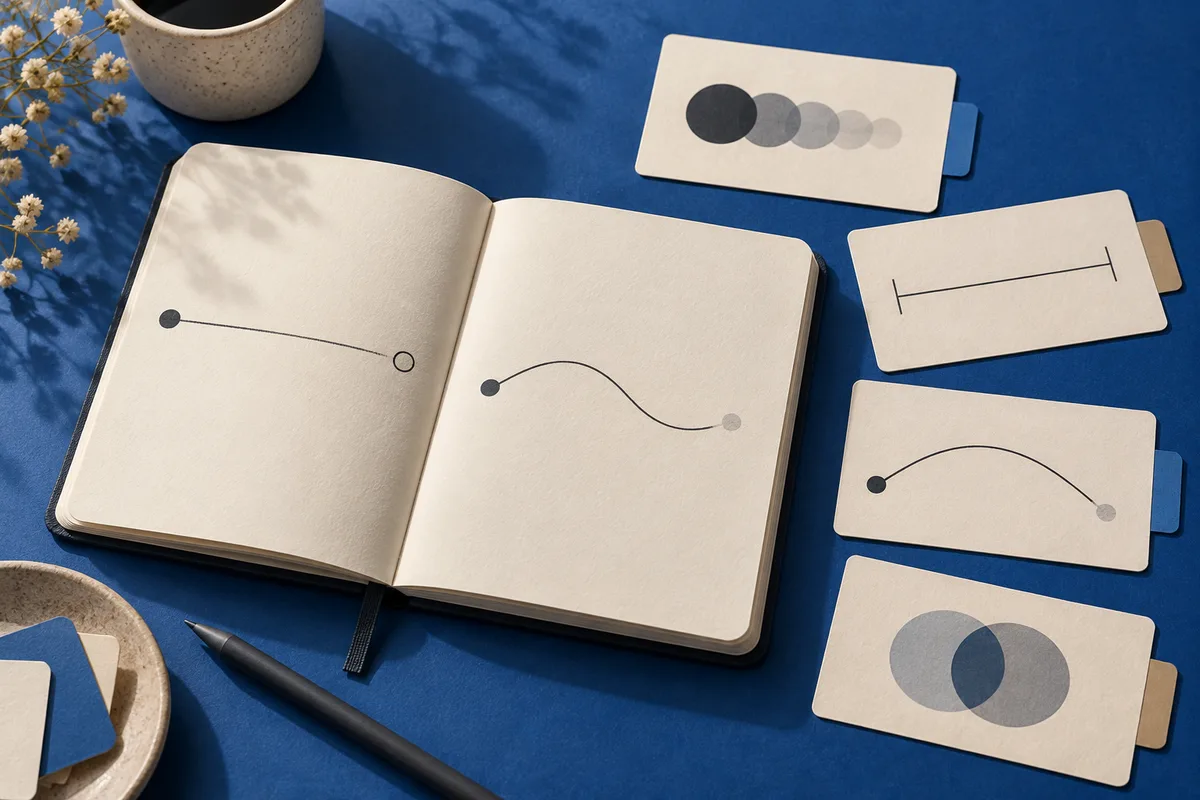
For self-understanding, track the behavior across a few ordinary situations rather than trying to settle it with a label. After each interaction, note four things: how much you spoke, whether you wanted to speak, what made speaking easier or harder, and how you felt afterward. Add the setting, group size, familiarity, topic, and whether the exchange moved quickly.
The pattern may point in different directions. Speaking little while feeling content and wishing to remain in a small, familiar exchange is consistent with a quieter social preference. Wanting to speak but expecting criticism suggests apprehension deserves separate attention. Speaking little only when the topic is unclear suggests information or processing demands. Speaking freely in writing but not in rapid conversation suggests that channel and pace matter. These are working hypotheses, not verdicts. Repeat the observation before drawing a personality conclusion.
Use the distinction to make a better next choice
The practical payoff is not deciding whether you are a quiet person or an introvert. It is choosing conditions that help you participate without pretending to be someone else. You might ask for the agenda before a meeting, write down a point in advance, choose a smaller conversation, or follow up in writing. If you want more social contact but repeatedly avoid it because of intense fear, persistent distress, or major interference with daily life, that is a different question from personality preference and may be worth discussing with a qualified professional.
Return to the opening question with this changed interpretation: quiet and introverted can overlap, but they name different kinds of information. Quietness describes an episode of behavior. Introversion is a broader tendency that may influence which settings feel rewarding or tiring. This week, observe one quiet interaction and one talkative interaction, then ask what changed between them. That small comparison is more useful than turning either moment into an identity. For further model explainers and reflection guides, explore the Personality Profile topics library.
Questions readers ask
Can an introvert be talkative?
Yes. Introversion is a tendency, not a speaking limit. An introverted person may be talkative with trusted people, on a meaningful topic, or in a setting that feels manageable, and quiet in a crowded or unfamiliar one.
Is being quiet a sign of shyness?
Not by itself. Shyness involves social discomfort or inhibition, while quietness only describes limited speech in a situation. Look for whether the person wants to participate and what they expect might happen if they do.
How can I tell whether I am quiet or introverted?
Observe both behavior and preference across settings. Record how much you speak, whether you wanted more interaction, what made participation easier, and how you felt afterward. Repeated patterns are more informative than one conversation.
Can social anxiety be mistaken for introversion?
It can be. Both may involve reduced participation, but social anxiety centers on intense fear or anxiety about judgment, with persistent distress, avoidance, or meaningful interference. Quietness or introversion alone does not establish social anxiety.
Sources and notes
- Introversion–extraversion, APA Dictionary of Psychology
Supports defining introversion and extraversion as a continuum of inward and outward orientation rather than fixed categories.
- Introversion and Social Engagement: Scale Validation, Their Interaction, and Positive Association With Self-Esteem
Supports distinguishing introversion from social engagement and noting that introverted people can participate effectively in groups.
- Investigating the Association Between Social Interactions and Personality States Dynamics
Supports explaining personality as both relatively stable tendency and variable state shaped by situations and momentary behavior.
- Individual Differences and Personality Traits Across Situations
Supports the claim that personality expressions, including extraversion, can vary across work, family, friends, and other situations.
- What’s the Difference Between Shyness and Social Anxiety?
Supports separating context-dependent shyness from persistent fear of judgment, avoidance, distress, and functional impact.
- Shyness and Social Anxiety
Supports the narrower distinction between ordinary shyness and social anxiety symptoms involving fear, avoidance, persistence, and impairment.
Apply it to your own pattern
See the rest of the pattern, not just this one trait.
From this guide: Test this article's distinction against one repeated situation in your own life.
Build a private Context Profile across ten everyday continuums, then compare the result with the situations and roles you are considering.